

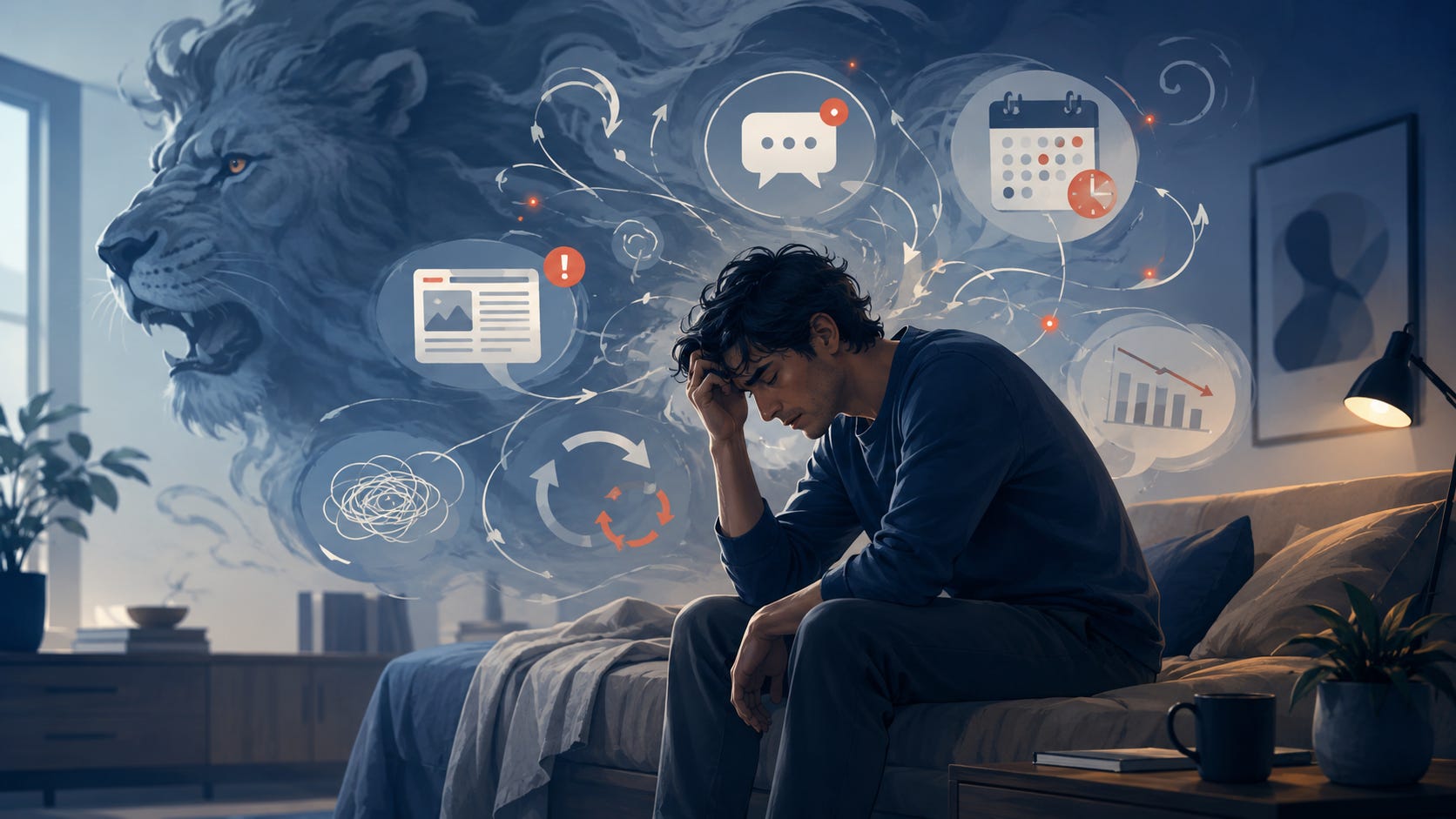
A zebra runs from a lion. If it survives, it goes back to eating grass within minutes.
Someone gets through a tough meeting, then replays it over and over in their mind later that night, even while taking a shower.
In both cases, the danger is gone. But only one of them keeps thinking about it.
Robert Sapolsky has spent decades studying stress in both baboons and people. His research shows that our bodies are built for short-term emergencies, but things like memories, news stories, or worries about the future can trigger the same stress response. We can’t always avoid stress, but often it’s our reaction afterward that does the most damage.
A lot of these habits seem harmless, and some even feel helpful. But once you spot them, you can stop yourself from adding more stress to your day.
Here are nine common ways we keep stress going long after the real problem is over.
1. Replaying a conversation that already ended
The party is over. The meeting is finished. But your mind keeps going back to it.
You keep thinking about the conversation, remembering someone’s expression or what you wish you had said. It might feel like you’re solving the problem, but most of the time you’re just reliving the same embarrassment or frustration. Your body still reacts as if the threat is real.
Sapolsky explains that people can remember their most awkward or embarrassing moments and keep feeling stressed long after they’re over. A five-minute event can turn into hours of replaying it in your mind.
Thinking things over can help you learn, but going over the same issue again and again just keeps you stuck. Ask yourself: Are you learning something, solving the problem, or just repeating it on an endless loop?
2. Rehearsing a disaster that hasn’t happened
Your mind imagines the bad news before the test results come in. It worries about losing your job before the meeting even happens. It expects rejection before you even ask the question.
It can feel like you’re getting ready for what might happen, but you’re not. Your body reacts to every imagined problem, even if it never comes true. Sapolsky says this is one of the strangest things about human stress: we don’t need a real danger. Our minds can make one up from memories or imagination.
Preparing helps you make a decision. Worry just goes in circles and only feels like planning.

3. Opening the news before your feet hit the floor
Many people start their day by reading about wars, shootings, market crashes, or arguments online. Even if nothing happened where you are, your body can still feel like danger is close.
Sapolsky’s research shows that reading about suffering far away can trigger the same stress response as real danger. The issue isn’t staying informed. The problem is starting your day with bad news you can’t do anything about. That keeps your stress levels high for no real reason.
4. Deciding there’s nothing you can control
Feeling powerless is stressful by itself. Stress gets even harder when you think you can’t control anything. Even making a small choice can help you feel better in a tough situation.
Having some control can make daily stress easier to handle. But some things are out of everyone’s hands, and looking for what you could have done differently often just makes you feel guilty for no reason.
Instead of trying to control everything, focus on the next helpful step. Make a phone call, ask for help, or choose one small action to move forward.

5. Withdrawing exactly when you need people most
Stress often leads people to cancel plans and stop answering calls, saying they’ll reconnect when things settle down. But that’s when isolation takes away one of the best ways to cope with stress.
Sapolsky says real support isn’t about having lots of contacts. You can know many people and still feel alone. What really helps is having someone who stays by your side when things get hard, not just a big group chat.
6. Treating one setback as proof everything is falling apart
Two people can go through the same tough week. One sees it as just a temporary problem. The other sees it as proof that everything is falling apart.
Sapolsky says the way we see events changes how stressful they feel. Not getting a reply can feel like rejection. One bad morning can make it seem like all your progress is gone. This isn’t about pretending things are okay when they’re not. Sometimes things really do get worse. But stress often makes one problem feel much bigger, so it helps to separate facts from feelings before you decide what’s really happening.

7. Postponing rest until the body forces it
Rest and recovery often come last, after emails and other tasks, until you’re so tired or sick that you have to stop.
Our stress response is built for short-term emergencies, not constant pressure. Managing stress shouldn’t be something you only do on weekends or when you have extra time. It works best as a regular habit, not just a quick fix. Recovery can be as simple as a ten-minute walk after dinner, turning off your laptop at a set time, or sitting quietly before your next task. These small routines let your body know the crisis has passed.

8. Saying yes when you mean no
Every time you say yes when you don’t have to, you add more stress to your week. People often agree to things just to avoid disappointing someone, but then end up quietly resenting it.
Sapolsky’s advice about saving twenty minutes a day isn’t really about the time. It’s about the choice behind it: your well-being matters enough to make space for it. Setting that boundary does more than free up your schedule. It reminds you that your time is still yours. Some of the times you say no will feel uncomfortable, but that’s easier to handle than the resentment that comes from always saying yes.
9. Turning stress relief into one more task to fail at
The to-do list starts to grow: Meditate for twenty minutes. Write three pages in your journal. Take a cold plunge. Track your sleep.
Now you end up feeling stressed about not handling your stress well enough.
Meditation helps some people relax, but others just worry if they’re doing it right. What matters most is finding something that really helps you and that you’ll keep doing, even after it stops feeling exciting.
For someone else, relief might come from taking a walk, gardening, playing music, or knitting.
The best way to handle stress is to find something that really helps you and that you’ll still want to do a year from now.
The Stress After the Stress
The stress response isn’t broken. It’s doing exactly what it evolved to do: get you through the next few minutes of danger.
The problem is that modern life gives our stress system lots of false alarms. A memory, a news headline, an unanswered text, or even a worry about next week can trigger it.
You might not be able to avoid the first stressful event, but you can often stop the second wave of stress that comes after.
The next time stress sticks around long after the moment is over, ask yourself:
Am I responding to what is happening right now, or am I reacting to something that has already ended or may never happen?
You might not be able to stop your first reaction to stress, but you can choose not to keep fueling it.